
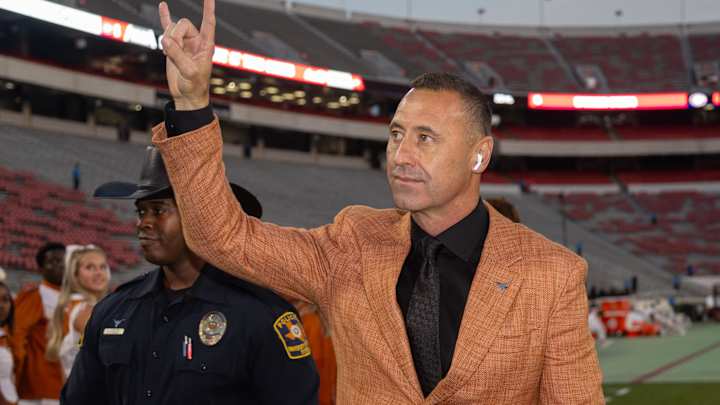
Texas head coach Steve Sarkisian has recently added his voice to a growing chorus within college football calling for reform in the rapidly evolving world of name, image, and likeness (NIL). His concern centers on what he describes as the “irrational” behavior of some agents operating in the college space and the lack of a meaningful certification or oversight process to regulate them.
Since NIL rules changed in 2021, college football has entered an era where players can earn significant money while still enrolled in school. While the opportunity has been empowering for athletes, it has also opened the door for individuals claiming to be agents or representatives with little accountability. Sarkisian has warned that this environment can create confusion, misinformation, and poor decision-making, particularly for young athletes who may not yet have the experience to evaluate complex financial and contractual advice.
Sarkisian’s criticism is not aimed at professional agents as a whole, but rather at the absence of standardized requirements for those advising college players. Unlike the NFL, which requires agents to be certified by the players association and adhere to established regulations, college football currently lacks a unified system to vet or discipline agents. As a result, almost anyone can present themselves as an advisor, regardless of qualifications or intentions.
This lack of structure, Sarkisian argues, can lead to unrealistic promises about NIL deals, pressure to transfer schools, or advice that prioritizes short-term financial gain over long-term development. Coaches are often left dealing with the fallout, trying to stabilize rosters and refocus players whose expectations may have been inflated by outside voices. More importantly, the athletes themselves are the ones most at risk of being misled.
Sarkisian has emphasized that college players need protection, not exploitation. Many are teenagers navigating high-stakes decisions involving money, branding, and their future careers. Without guardrails, the system can favor those looking to profit off athletes rather than support them. A certification process, he suggests, would at least ensure a baseline level of professionalism, ethics, and accountability among agents working in the college game.
His comments reflect a broader concern across college athletics. Administrators, coaches, and even players have acknowledged that NIL reform is necessary to sustain competitive balance and protect athlete welfare. While opinions differ on how regulation should look, there is increasing agreement that the current “wild west” approach is unsustainable.
By calling attention to the issue, Sarkisian is pushing the conversation forward. Whether through the NCAA, conferences, or federal legislation, many believe some form of agent certification and oversight is inevitable. Until then, coaches like Sarkisian will continue advocating for systems that put athletes first, ensuring that opportunity does not come at the cost of integrity or trust in college football.