
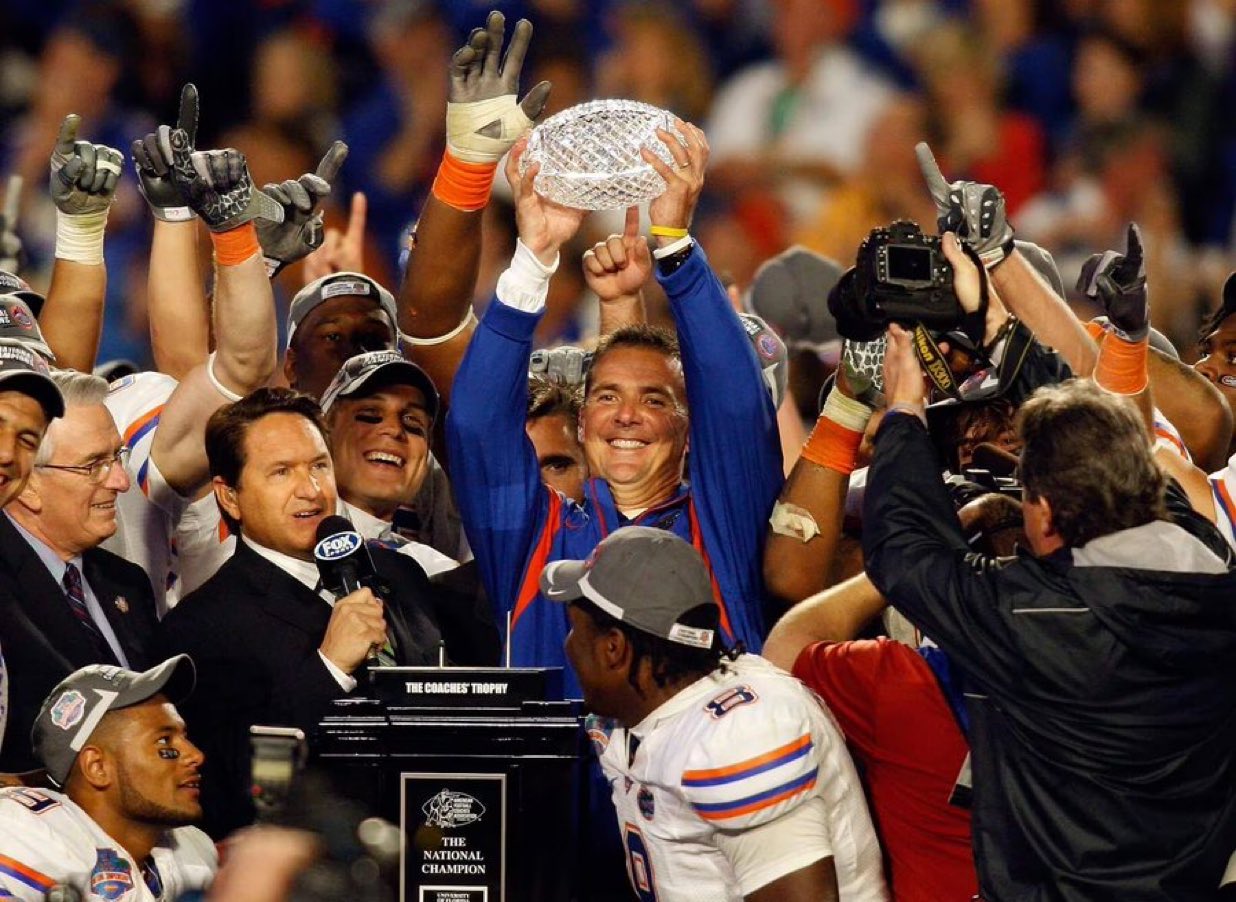
The 2008 Florida Gators are remembered as one of the most dominant teams in college football history. Led by head coach Urban Meyer and Heisman Trophy–winning quarterback Tim Tebow, Florida stormed through the season and capped it with a commanding 24–14 victory over Oklahoma in the BCS National Championship Game. On the field, that team symbolized excellence, toughness, and championship culture. Off the field, however, the legacy of that roster has become far more complicated—and controversial.
Years after lifting the national title trophy, reports and research have revealed a troubling statistic tied to that celebrated roster: **41 players from the 2008 Florida Gators team were later arrested**, meaning roughly **one in every three players** from the championship squad had an encounter with the criminal justice system at some point after joining the program. The arrests ranged widely in severity, from minor misdemeanors to more serious charges, and not all resulted in convictions. Still, the sheer volume has kept the team at the center of ongoing debate about college football culture, accountability, and institutional responsibility.
The revelation has resurfaced repeatedly in discussions about Urban Meyer’s tenure at Florida. Meyer, who coached the Gators from 2005 to 2010, built a powerhouse that won two national championships and produced dozens of NFL players. Yet critics argue that the program’s intense “win-at-all-costs” mentality may have contributed to off-field issues being minimized or handled internally rather than addressed transparently. Supporters counter that many of the arrests occurred years later and that young athletes, like many college students, can make poor decisions unrelated to football culture.
Former players and analysts have offered mixed perspectives. Some argue the statistic lacks proper context, noting that arrests do not equal guilt and that high-profile athletes are often more visible and more likely to be reported. Others believe the numbers point to a deeper systemic issue—one in which elite talent was prioritized over character development, personal accountability, and long-term support.
The 2008 Gators were stacked with stars. That roster included future NFL standouts such as Tim Tebow, Percy Harvin, Brandon Spikes, Joe Haden, and Carlos Dunlap. Many went on to successful professional careers, while others struggled after football, highlighting the difficult transition athletes often face once their playing days end. Critics argue that universities benefit immensely from players’ performance during their college years but sometimes fall short in preparing them for life beyond the sport.
Today, the story of the 2008 Florida Gators serves as a case study in the dual realities of college football dominance. On Saturdays, the team delivered unforgettable moments and a championship that still resonates with Gator fans. Off the field, the long-term outcomes for many players raise uncomfortable questions about oversight, discipline, and the true cost of sustained success.
As college football continues to evolve—with increased focus on player wellness, mental health, and off-field conduct—the legacy of that Florida team remains a powerful reminder that championships alone do not define a program. The full story includes what happens long after the final whistle blows.