
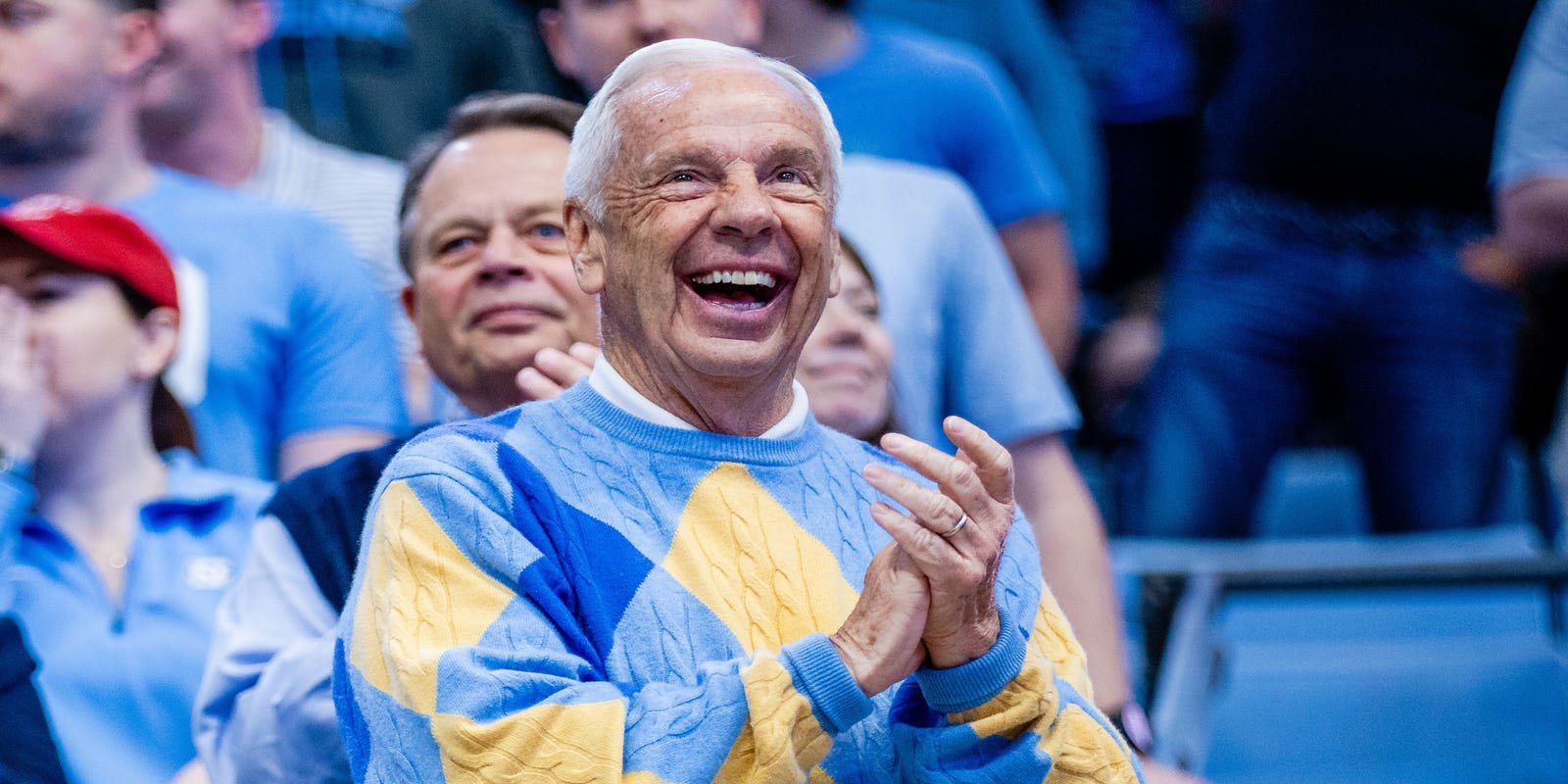
BREAKING NEWS: Roy Williams Rejects Monument of Honor — A Quiet Decision Leaves Chapel Hill Stunned….
Chapel Hill awoke today to a ripple of disbelief following reports that legendary former North Carolina men’s basketball coach Roy Williams has quietly declined a proposed monument in his honor. In a town where statues often symbolize legacy and permanence, the imagined decision has sparked conversation not just about basketball greatness, but about humility, memory, and how legends choose to be remembered.
According to sources close to the situation, the monument—envisioned as a bronze likeness outside the Dean E. Smith Center—was meant to commemorate Williams’ extraordinary tenure at UNC, where he won three national championships and became one of the most respected figures in college sports. The proposal reportedly had broad institutional support and was expected to be announced with fanfare. Instead, it ended with a polite but firm “no.”
What makes the decision so striking is its tone. There was no press release, no public statement, no attempt to shape the narrative. Just a private message expressing gratitude and a preference to redirect attention elsewhere. In this imagined scenario, Williams’ reasoning was simple: the program, the players, and the university mattered more than any single figure cast in bronze.
For many in Chapel Hill, the news landed with emotional weight. Roy Williams is not merely a coach in the Carolina canon; he is a steward of tradition, a bridge between eras, and a living embodiment of the values fans associate with the program. To honor him with a monument felt natural—almost inevitable. His refusal, then, feels like a disruption of expectation.
Yet for others, the decision feels perfectly on brand. Williams has long been known for deflecting praise, for crediting assistants, players, and predecessors before himself. Even at the height of championship celebrations, he often spoke less about banners and more about relationships. In that light, declining a monument becomes less a rejection of honor and more a final coaching lesson.
Local reaction, in this hypothetical moment, has been mixed but thoughtful. Some fans express disappointment, arguing that future generations deserve a visible reminder of Williams’ impact. Others admire the restraint, seeing it as a rare act of humility in an era of self-curated legacies and personal branding.
University officials, caught off guard, have reportedly respected the decision and begun discussing alternative ways to recognize the era without centering it on a statue. Scholarships, facility enhancements, or community initiatives bearing Williams’ influence—but not his likeness—have been floated as possibilities.
Whether imagined or real, the scenario raises a deeper question: how should greatness be honored? Roy Williams’ fictional refusal suggests that legacy is not always something to be built in stone. Sometimes it lives more powerfully in banners raised, players mentored, and values passed quietly from one generation to the next.