
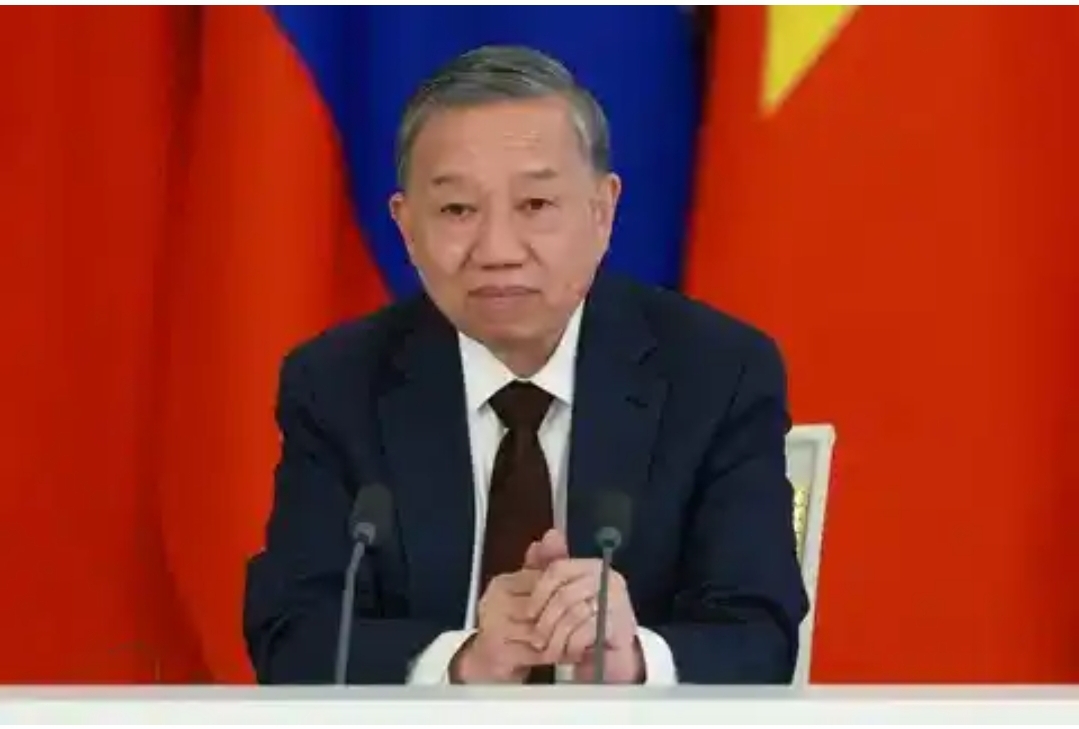
**Vietnam’s Next Leadership Taking Shape as January Congress Nears**
HANOI — Vietnam’s political landscape is rapidly converging on a crucial transition as the ruling Communist Party finalises decisions on the country’s top leadership ahead of its 14th National Party Congress, scheduled for **January 19–25, 2026**. The once-in-five-years congress will formally ratify the country’s next leadership team and set strategic priorities for the next half-decade, as Hanoi seeks continuity amid economic ambitions and geopolitical pressures. ([CNA][1])
Senior officials of the **Communist Party of Vietnam (CPV)** concluded a pivotal **two-day plenum in Hanoi** on Tuesday, tasked with vetting and finalising candidates for key state and party posts. While no official names were released at the close of the session, **Party General Secretary To Lam** — who ascended to the post in 2024 following the death of former leader Nguyễn Phú Trọng — is widely seen as the frontrunner to retain his position, which remains the most powerful office in Vietnam’s one-party system. Delegates at the meeting reportedly expressed strong support for the selected slate, underscoring party unity ahead of the formal nomination process. ([CNA][1])
To Lam’s leadership since mid-2024 has been marked by an assertive push for administrative and economic reforms, coupled with efforts to strengthen state oversight while promoting private sector growth. His tenure has also been characterised by an enhanced role for the **Ministry of Public Security** in governance, raising both praise and scrutiny from analysts and investors. Speculation persists that he may seek to further consolidate power — a possibility some observers compare to leadership models elsewhere in the region, although insiders caution that concrete decisions will only emerge at the congress itself. ([CNA][1])
Beyond the general secretary role, the congress will decide on the other pillars of Vietnamese leadership: the **state presidency**, **prime minister**, **parliament chair**, and the recently elevated position of the **standing member of the party secretariat**. Public commentary and diplomatic circles in Hanoi are rife with potential candidates, though internal party dynamics — including factional influences tied to security and military interests — are expected to shape final outcomes. Observers note that maintaining a geographic and generational balance among leadership posts could factor into deliberations, even as northern political figures remain predominant. ([CNA][1])
The party’s leadership selection process is highly structured: roughly 1,600 delegates to the congress will elect approximately 200 officials to the newly constituted **Central Committee**, which will in turn choose the **Politburo** — the innermost circle of power — and from it the general secretary. This multi-stage election underscores the collective decision-making ethos of the CPV, even amid tightly choreographed elite negotiations. ([The Business Standard][2])
Vietnam’s political transition comes at a time of ambitious economic goals. Party documents and preparatory meetings have outlined targets for strong GDP growth and structural reforms through 2030, aiming to accelerate development and enhance the country’s global economic standing. The congress will also review and approve key reports assessing Vietnam’s reform programmes and setting policy directions for the coming era. ([vietnamnews.vn][3])
As the January congress approaches, markets and diplomatic partners are watching closely. Investors have reacted positively to signs of political stability, while foreign governments — from Beijing to Washington — remain attentive to Hanoi’s strategic priorities amid shifting global dynamics. With personnel decisions now largely settled internally, Vietnam enters the final stretch before a congress that will shape the nation’s political and economic trajectory for years to come.