
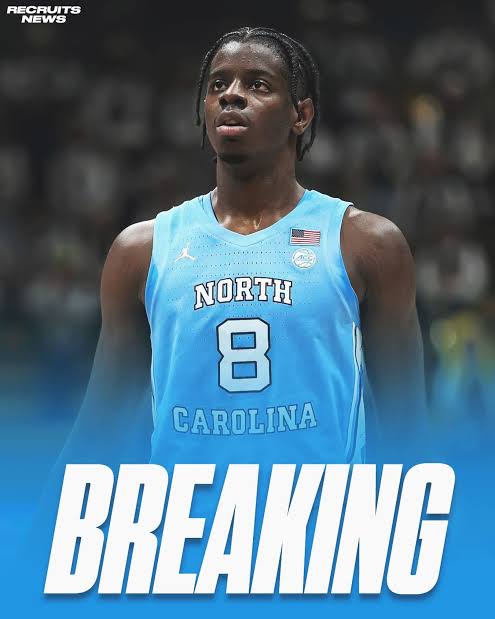
BREAKING: UNC basketball guard Caleb Wilson’s preliminary injunction for eligibility has been denied.
The sought-after injunction — filed amid a dispute over Wilson’s eligibility under NCAA rules — was aimed at temporarily overriding the association’s eligibility decision so he could play immediately. However, a judge ruled against issuing the court order, meaning the NCAA can continue enforcing its regulations as written. While specific details of Wilson’s case have not been fully disclosed publicly, the denial marks a clear judicial reluctance to upend longstanding NCAA eligibility structures without a strong showing that those rules were arbitrarily applied or unlawful.
Wilson, who has been one of the most impactful players for North Carolina this season, has already faced adversity on the court due to a fractured left hand that sidelined him in recent games — an injury that has kept him out during a crucial stretch of the Tar Heels’ ACC schedule. (100.5 The Game) In his absence, UNC has struggled with roster challenges, and the team’s ability to compete at a high level without him has been tested.
The legal battle over Wilson’s eligibility — though unique in its particulars — fits into a broader national pattern of student‑athletes challenging NCAA eligibility decisions. Other recent cases involving collegiate athletes seeking courts’ interventions against NCAA rulings have produced mixed outcomes. For example, another player’s request for a preliminary injunction against the NCAA was denied in early 2026, effectively ending his college season after the judge determined the legal standard for injunctive relief was not met.
In legal terms, a preliminary injunction is meant to prevent irreparable harm to a plaintiff while a case proceeds. Courts typically require strong evidence that the plaintiff is likely to succeed on the merits of the underlying claim and that immediate harm would occur without the injunction. In eligibility disputes, judges often hesitate to override a national association’s rules absent clear proof of arbitrary application or a compelling breach of law — a high standard that, in Wilson’s situation, was not met.
From a basketball standpoint, the implications for the Tar Heels are immediate and potentially severe. Wilson leads the team in scoring and rebounding, and his potential absence — whether due to injury or an unresolved eligibility dispute — could significantly affect North Carolina’s performance as the season moves toward March and the NCAA Tournament. Coach Hubert Davis and his staff now must adjust game plans and rotations while navigating uncertainty surrounding Wilson’s availability.
Supporters of athletes’ rights have closely watched eligibility cases like this one, as they are part of a broader legal conversation about how the NCAA governs player participation and what recourse athletes have when disputing those decisions. Some high‑profile cases — including quarterbacks and other position players in football — have seen injunctions granted or contested in state courts, highlighting a developing legal strategy among athletes’ legal teams.
For now, however, the court’s denial leaves Wilson bound by existing NCAA eligibility rules. As UNC continues its quest for postseason success, all eyes will be on how the team responds without one of its brightest stars and how the legal landscape around eligibility challenges evolves in college sports.